

Keynotes
Keynote Speakers

Luis Serrano, PhD, NeuraLoc
Bio: Luis combines over two decades of experience in GNSS, ADAS, and autonomous systems with a visionary drive to redefine precision and safety in mobility. Having held senior roles at u-blox, Trimble Navigation, STMicroelectronics, BMW and Apple’s Special Projects Group (SPG), he has contributed to some of the industry’s most advanced positioning and perception programs, including at Apple’s SPG and General Motors’ SuperCruise with Trimble.
His expertise spans GNSS, robotics, surveying, functional safety, and AI-based localization. At NeuraLoc, Luis leads the mission to make GNSS corrections and predictive integrity services the trusted foundation for autonomous, connected, and accuracy-driven technologies worldwide.
Abstract: High-precision GNSS positioning has become a foundational technology for a wide range of emerging applications, including autonomous vehicles, robotics, machine guidance, and critical infrastructure monitoring. While techniques such as Real-Time Kinematic (RTK) and network correction services have significantly improved positioning accuracy, a key challenge remains: ensuring the integrity and reliability of positioning solutions in complex and safety-critical environments.
As autonomy and precision systems move from controlled environments to real-world deployment, positioning systems must not only be accurate but also capable of detecting faults, monitoring signal quality, and providing confidence metrics in real time. Multipath effects, atmospheric disturbances, signal interference, and hardware inconsistencies can introduce subtle positioning errors that traditional correction services alone are not designed to identify or mitigate.
This keynote presents a new approach to positioning reliability through AI-powered GNSS integrity monitoring integrated with global correction services. The work introduces a cloud-based architecture that combines RTK positioning, real-time signal observables analysis, and machine-learning models trained to detect anomalies and predict degradation in positioning performance.
The system leverages a distributed network of GNSS reference stations and real-time data streams to monitor satellite signals, detect multipath patterns, and identify abnormal positioning behaviour across the network. Machine-learning techniques enable the system to extract patterns from large GNSS datasets and provide predictive indicators of positioning quality, effectively creating a safety layer on top of traditional correction services.
The presentation will discuss the development of a global correction and integrity monitoring service designed to support safety-critical applications. Early deployments demonstrate how combining RTK positioning with AI-driven integrity monitoring can significantly improve the reliability of positioning solutions for autonomous machines, robotics, deformation monitoring, and other precision systems. By closing the loop between global GNSS correction infrastructure, real-time integrity monitoring, and machine-learning-based signal intelligence, this approach represents a step toward the next generation of trusted positioning services for autonomy and precision applications.

Jussi Collin, PhD, Nordic Inertial
Bio: Jussi Collin received the M.Sc. and Dr.Tech. degrees from Tampere University of Technology, Finland, in 2001 and 2006, respectively, specializing in applications of inertial sensors. He is the founder and CEO of Nordic Inertial Oy and holds a title of Docent at Tampere University. Nordic Inertial Oy develops algorithm and software solutions designed to maximize inertial sensor performance. Its work emphasizes practical solutions to complex real-world challenges, bridging theoretical innovation and tangible customer-centric benefits.
Abstract: Inertial sensing is moving from a supporting role toward becoming a fundamental source of motion awareness for robots, vehicles, and other autonomous systems. This keynote explores that transition through a three-world perspective: the physical world of motion, sensors and actuators; the interpretation layer where measurements become meaningful state information; and the knowledge layer of algorithms, models, reference data, simulation, and validation.

Stefano Binda, ESA
Bio: Stefano Binda is responsible for exploring and discovering new and innovative positioning, navigation and timing technologies in the Navigation Innovation Support Programme (NAVISP), defining activities under the Element 1, at ESA/ESTEC in The Netherlands. He is an aeronautical engineer with more than 28 years of professional experience, having covered, in industry and at ESA, various positions, from engineering and design to verification, for space, ground and user equipment, in attitude determination and control and satellite navigation. As a member of the Galileo Project team, he contributed to the achievement of the First Galileo Open Service Position Fix in 2013 and of the first position fix with OS Navigation Message Authenticated satellites in 2020.
Abstract: Positioning, Navigation and Timing (PNT) functions are permeating our modern society: there are virtually no activities which can be performed without resorting to some form of PNT. Global Navigation Satellite Systems (GNSS) are the most convenient positioning systems, used by billion of users every day, without even realising it, as positioning from Space brings automatically global coverage, and sophisticated signals allow excellent performance in most of the user environement. GNSS have become a commodity, like water and electricity but need to be protected. The Protect, Toughen and Augment paradigm addresses the issues at government, manufacturer, operator and user level. Moreveor, indoor and underground some shortcomings are inherent to the system design. Several initiatives to advance PNT from Space are ongoing, from the flagship European GNSSs Galileo and EGNOS, including the new layer at LEO, Celeste, to the advanced projects carried out in the Navigation Innovation Support Program (NAVISP).
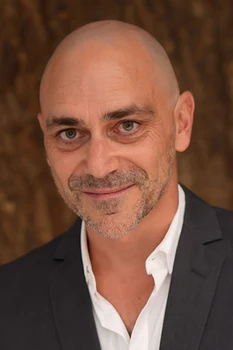
Maxime Guillaud, Inria, France
Bio: Maxime Guillaud is a Senior Research Fellow at INRIA in Lyon, France. He has over 20 years expertise in the domain of wireless communications, in both academic and industrial research environments. His expertise lies the physical layer of radio access networks, including transceiver algorithms, channel modeling, and modulation design. He received the M.Sc. degree in electrical engineering from ENSEA, Cergy, France, in 2000, and the Ph.D. degree in electrical engineering and communications from Telecom ParisTech, Paris, France, in 2005. From 2000 to 2001, he was a Research Engineer with Lucent Bell Laboratories (now Nokia), Holmdel, NJ, USA. From 2006 to 2010, he was a Senior Researcher with FTW, Vienna, Austria. From 2010 to 2014, he was a research associate with the Vienna University of Technology, Vienna. From 2014 to 2022, he was a research engineer with Huawei Technologies France. He is a Senior IEEE member and associate editor of the Transactions on Wireless Communications.
Abstract: t.b.a.