

Speakers
Our keynote speakers
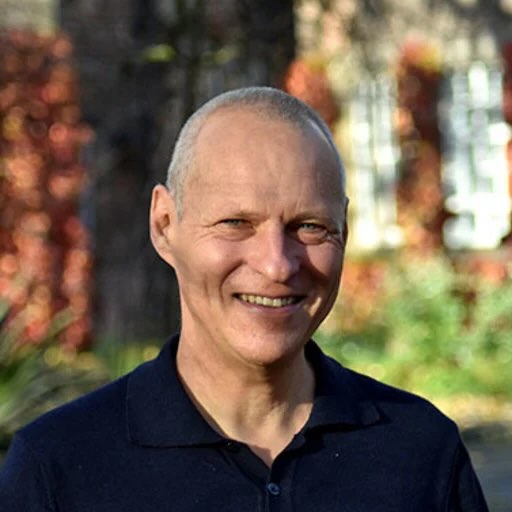
Professor Matthew Clarke
In his career, Prof. Clarke has taught in schools at all levels, from early years to secondary, and has taught and researched at universities in Scotland, England, Australia, Hong Kong, and the United Arab Emirates. His research draws on a range of interdisciplinary fields, including social, political, and psychoanalytic theories, and focuses on developing critical analyses of educational policy and politics, with particular emphasis on how policy shapes the professional work and identities of teachers. Recent books include Education and the fantasies of neoliberalism: Policy, politics and psychoanalysis (Routledge, 2022), Lacan and education policy: The other side of education (Bloomsbury, 2019) and Teacher education and the political: The power of negative thinking (Routledge, 2017).
In his talk, Professor Matthew Clarke invites us to think about “Rethinking the power of education: A ‘weak ontology’ perspective“.
Education is often lauded as a vehicle for economic growth, social progress and individual development. Yet such claims appear problematic when we recall education policy’s history of “inflated claims about both the fulfilment of the child and the development of society [that] are endlessly broken in practice” (Donald, 1992, p. ix). As part of developing a less ‘inflated’ and more animated reading of the power of education to transform society, this paper argues for a ‘weak ontology’ perspective, in recognition that all fundamental conceptualisations of self, other, and world, while necessary or unavoidable, are nonetheless contestable. Crucially, a weak ontology tempers the certainty and instrumentality of dominant educational discourses but potentially enlivens a field that has been mortified by neoliberal education policies and practices. Such a perspective might fruitfully frame education in terms of three disjunctive registers that I refer to as the pragmatic, political and poetic. I argue that, in contrast to the dominant heroic, yet fantasmatic, view of education, as a universal panacea, we might aspire to what Sharon Todd (2009) describes as an ‘imperfect education,’ by keeping each of these registers in play as a way to create spaces for creativity, growth and transformation.
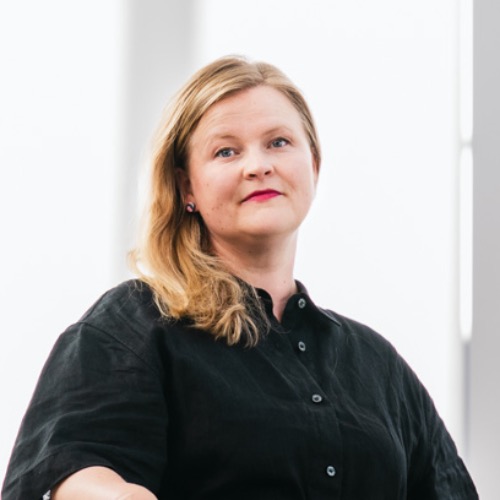
Professor Sonja Kosunen
Sonja Kosunen is the Director of the Social Studies in Urban Education (SURE) Research Unit at the University of Eastern Finland and the responsible director of several international research projects. During her career, Kosunen has extensively studied the construction of inequality in education and training from the perspectives of educational sociology and urban studies. One of her ongoing projects, Stratification and the Segregation of Teachers in Education Markets (SegrEd) (ERC, 2025–2030), is developing a theoretical framework that combines the fields of stratification and segregation research by comparing the regional differentiation of primary education and the social construction of teaching in France, Sweden, and Finland.
During her career, Kosunen has worked as a visiting researcher in France, Chile, Denmark, and Iceland and has given invited lectures around the world. She is currently a collaborative researcher at SciencesPo Paris in France and appointed to a visiting professorship at Uppsala University, Sweden. Kosunen’s recent books, in collaboration with colleagues, include Koulu ja eriarvoisuus (Gaudeamus, 2024) and Finland’s famous education system: Unvarnished insights into Finnish schooling (Springer, 2023).
In her talk, Professor Sonja Kosunen invites us to think about “Educational Research, power and boundaries”.
Kasvatuksen ja koulutuksen kysymykset ovat tutkimuksellisen kiinnostuksen lisäksi usein myös julkisen ja poliittisen keskustelun polttopisteessä. Tutkimustietoa ainakin kuvataan käytettävän koulutuspolitiikan tekemisen taustalla ja perusteena niin Suomessa kuin kansainvälisestikin, mutta piiloon usein jää, miten. Tämä piiloon jääminen sisältää lukuisia kysymyksiä vallasta ja tietopohjaisen päätöksenteon politiikoista. Yhteiskunnallisen vuorovaikutuksen tehtävä on kirjattu Suomessa yliopistolakiin ja siten se kuuluu tutkijoiden työtehtäviin, vaikkei sitä yliopistolaisten työurien näkökulmasta juurikaan tueta kannustimin. Lisäksi julkiseen keskusteluun osallistuviin tutkijoihin kohdistuu monista suunnista paitsi kritiikkiä myös vihapuhetta, jonka tiedetään sukupuolittuvan: miksi siis tulisi vaivautua yleistajuistamaan kasvatustieteellistä tutkimusta? Tässä esityksessä pohdin tieteen vapautta ja kasvatustieteellistä tietoa, niiden suhdetta valtaan ja lopulta niitä rajoja, joita tutkijoille ja tutkimustiedon yhteiskunnalliselle vuorovaikutukselle voidaan asettaa tai jättää asettamatta. Nostan esityksessä aiemman tutkimustiedon valossa kriittiseen keskiöön ne eri kentät, joilla tutkimuskeskustelua ja tutkimukseen liittyvää keskustelua käydään, ja niitä positioita, joihin tutkijoita sekä asetellaan että joihin he itse asettuvat keskustelussa kasvatuksen ja koulutuksen kysymyksistä.
Photo: Niko Jouhkimainen