Keynote speakers

Re-City Logo

Sabine Knierbein: Tensions between Urban Care and Uncare: Situating care ethics, care labor and caring relations in an everyday-theory based approach to urban studies 

Thursday 30 October at 10:15-11:00, Auditorium A1

Abstract: The discourse on care has been on in the spatial arts, social science and humanities disciplines for a while right now: It has invited urban scholars to rethink the political through a moral philosophy on care ethics; to revisit the social by further advancing feminist critiques of Marxist (and other) thought) ; and to re-address the cultural through a focus on the body in geographies of everyday life, where moments of presence can be turned into moments of encounter, thus shaping geographies of encounter, and processes of learning. Care here has urban dimensions, the City is understood as harbouring constant social change and Democracy, in a radical care perspective, is first and foremost a spatial trope. By offering an intersectional analytical approach that combines the urban and spatial study of care ethics, care labor and caring relations, counter-individualist narratives are set up that help to frame humans as always being in (social, cultural, political) relations with other humans, and non-humans. What does radical mean in these three – political, cultural and social – dimensions of care? And why is care seen as radically needed to rethink also the ecological and economic practices to actualize urban democracy, too? 

Päivi Kymäläinen: Places of justice and radical care

Thursday 30 October at 11:00-11:45, Auditorium A1

Abstract: Place is one of the key concepts in understanding urban everyday life, yet its theoretical importance has not been fully acknowledged. By taking four conceptual viewpoints to place, I will discuss how places frame social life, as well as the practices of justice and caring in urban contexts. Place thinking offers various intellectual tools depending on if places are regarded as territories and locations; as meaningful urban spaces; as processes; or as agents. The concept of place offers perspectives for analysing especially mundane practices and experiences in which the formal aspects of justice (such as distributional and processual justice) are accompanied by more informal ones (such as recognition). I will ask how care might be constituted in relation to (just) places, and what radical care could mean in today’s urbanism.

Ross Beveridge: Urban Democracy as Ethos, Strategy and Practice

Friday 31 October at 13:40-14:30, Auditorium A1

Abstract: This paper outlines a project of democracy as urban self-government drawing on urban theory and the radical democracy tradition. Urban democracy, as understood here, is not architectonic, a project premised on a structured institutional model, like the state, but rests on political practices and common experiences of urbanity. This can lead to criticism that urban democracy is hard to define and is unrealizable as well as inadequate in the face of political power. To counter this line of argument, and with reference to recent European examples, the paper articulates urban democracy as an ethos, strategy and practice. In doing so, it confronts (1) democracy’s resonance as a political project of urban collective life; (2) democracy’s relationship with power, capitalism and the state; and (3) democracy’s multiple and mutable modes of being political. Urban democracy is, in essence, a decentralizing and fragmenting force. However, greater attention to these three components (ethos, strategy and practice), and greater learning and cooperation between projects, can facilitate the advance of urban democracy.
Sabine Knierbein

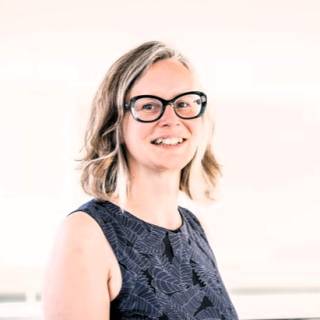
Sabine Knierbein photo

Sabine Knierbein (European Urban Studies (PhD), Internationale Urbanistik (PD)) is an Associate Professor for Urban Culture and Public Space and the Head of the Interdisciplinary Centre for Urban Culture and Public Space. She works at the Institute of Spatial Planning of the Faculty of Architecture and Planning at Technische Universität Wien in Austria. Sabine further holds a Journey(wo)man’s certificate as a landscape gardener and is a Chartered Engineer in Landscape Architecture / Open Space Planning. She has worked as Visiting Professor for Urban Political Geography (2020) and a Visiting Researcher (2021) at the Social Geography Lab (LAGeS) at the University of Florence as well as a Visiting Researcher at the Institute of Urban Design at Hafen City University Hamburg (2022). She is a founding member and advisory board member of the AESOP Thematic Group of Public Spaces and Urban Cultures.

Sabine explores everyday life and urbanization; urban politics, the political and democracy; disruptive precarity, unsettlement and crises; social inequality and intersectional urban research methodology and more recently also democracy theory, dissidence and alter politics. Sabine has co-edited the books Public Space and the Challenges of Urban Transformation (2014), Public Space and Relational Perspectives (2015), City Unsilenced (2017), Public Space Unbound (2018), Care and the City (2021), and Unsettled Urban Space (2023), all published with Routledge. Two monographs entitled Everyday Life and Urban Studies (Routledge, forthcoming 2026) and Lived Space and Urban Studies (planned for 2027) are currently in the making.

Päivi Kymäläinen

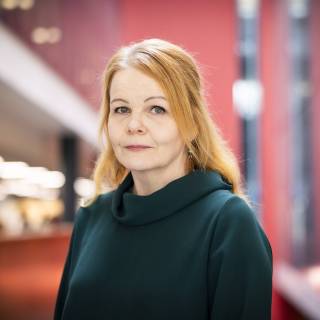
Päivi Kymäläinen photo by Jonne Renvall

Päivi Kymäläinen is a Professor of Social Policy at Tampere University, Finland. Her position is linked with Tampere University’s profilation area STUE (Sustainable Transformation of Urban Environments) and the question of socially sustainable cities. Päivi is also a Docent of Legal and Urban Geography, and leads the Research Network for Justice, Space and Society (JUSTSPACES). She is currently a PI in the research projects Housing Precarity (2024–2028), Forest Rights (2024–2027) and Space, Justice and Everyday Democracy (2022–2026). She has previously worked at the Universities of Turku and Oulu and at the Helsinki University of Technology, served as a visiting professor/scholar in Nordic (NTNU, Roskilde University, Uppsala University) and North American (Simon Fraser University, University of Pennsylvania) universities, and has been a Fulbright Senior Scholar at Syracuse University, US.

Päivi’s research interests include urban inequality, everyday democracy, housing precarity and place/law relations. She approaches these questions mostly through everyday life and practices, and in the contexts of alternative communities, suburban neighborhoods and urban public spaces.

Ross Beveridge

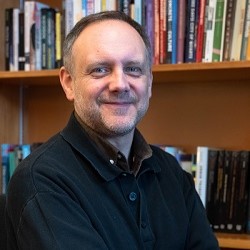
Ross Beveridge

Ross Beveridge is an interdisciplinary urbanist who has taught and published widely on urban forms of politics and democracy in diverse global contexts. Currently he is a Senior Lecturer in Urban Studies in the School of Social and Political Sciences at the University of Glasgow and a Visiting Researcher at the Georg-Simmel Centre for Urban Studies at the Humboldt University of Berlin.

Ross’s recent co-authored book, How Cities Can Transform Democracy (2022, Polity Press) presents a novel way of seeing democracy, shifting perspectives from institutions to practices, from jurisdictional scales to spaces of collective urban life, and from fixed communities to emergent political subjects. He is also co-founder and co-editor of the Urban Political Podcast which facilitates international dialogues on urban scholarship and activism.