

Keynote abstracts of FIRE-TI 2
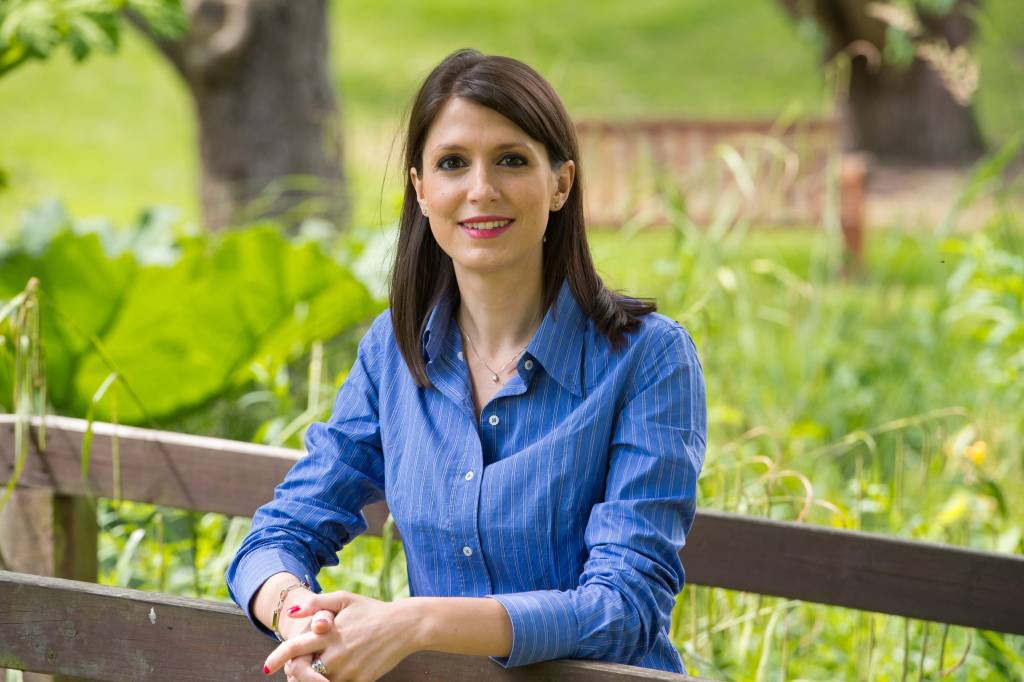
Elena Davitti
Keynote abstract by Elena Davitti, Centre for Translation Studies, University of Surrey (UK)
What does ‘the field’ become? Researching hybrid human–AI practices for live multilingual communication
Where a field “begins and ends, and how this delineation can be substantiated” has been identified as a central challenge for field research on translation and interpreting, all the more so as the notion of field “has taken on new digital and analogue dimensions and can encompass a wide spectrum” (Rogl, Schlager and Risku 2025: 2, 6). The challenge becomes more pressing when multilingual practice is distributed across people and AI-driven technologies: where, and what, is the field then? A case in point are real-time interlingual speech-to-text (STT) practices, situated between interpreting, translation and subtitling. Alongside keyboard-based methods, language professionals increasingly work with automatic speech recognition (ASR) and, in some workflows, machine translation (MT), in forms of human-AI interaction (HAII) that are still taking shape. Driven by demand for access across languages and modalities, these workflows vary widely in configuration, are unevenly implemented and technologically unstable, and are often assembled ad hoc in response to contingent needs.
I approach this question through my own research path, from naturalistic fieldwork on dialogue interpreting in public service settings, through simulated video-mediated interaction, to studies in which emerging hybrid human-AI workflows had to be built, and professionals trained in them, before they could be examined. Each step took me further from the field as conventionally understood, which raises the question of what still counts as field research. What connects these steps is a concern with who participates in mediated interaction, and how. After reviewing the different meanings “hybrid” has come to denote, I argue that debate on these practices, still largely framed around output quality and efficiency, needs to account for how interaction within these workflows is organised, what professionals actually do, and how the work affects them. AI does not simply add a new tool: it reshapes work environments, interactions, professional roles and relationships, and the knowledge professionals draw on, which is precisely what field research seeks to understand. It also changes what researchers can observe and how evidence is generated. I illustrate this with interlingual respeaking, or speech-to-text interpreting via ASR, where professionals lead the workflow rather than merely check machine output, and their real-time choices shape the accuracy of what reaches audiences who only ever see the written result. This position varies, however, as workflows move along a continuum from human-led to fully automated.
If AI is understood as a socio-technical system rather than a tool, research on such practices must extend beyond the system to the people working with and through it, and to the audiences whose access to content depends on what these workflows produce. No single discipline can absorb this reorientation alone: it calls for shared ground with research on HAII, (distributed) cognition and accessible communication. It also asks field research to rethink its own boundaries, particularly when there is too little established practice to observe. In such cases, fieldwork may need to include creating the conditions for the practice to be explored, for instance by training professionals and designing study tasks, and following it as it develops, with researchers inevitably shaping part of what they study. It may also need methods that capture change itself: how professionals adapt to, negotiate and cope with workflows that keep shifting around them. This broader view allows field research to engage with these workflows while they are still emerging, keeping both the professionals within them and the audiences who rely on them visible in the accounts we produce.
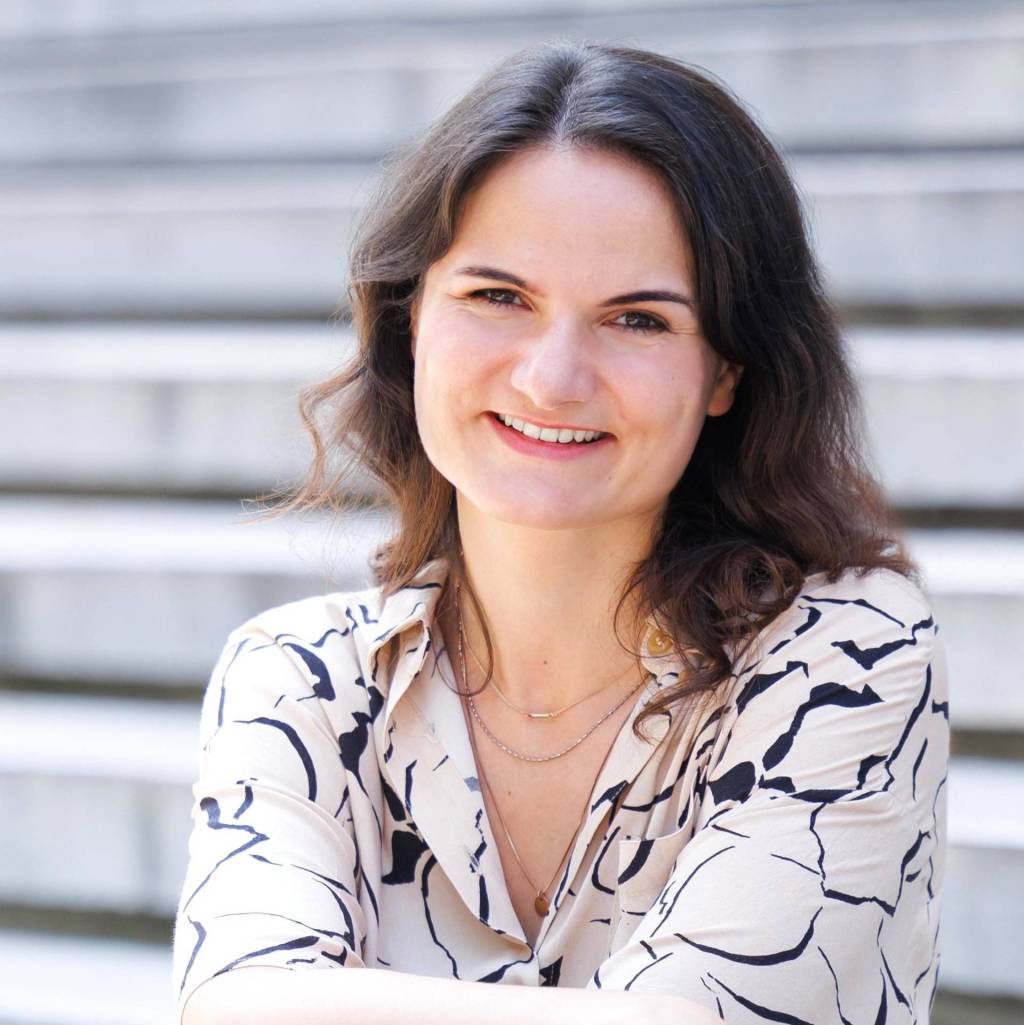
Regina Rogl
Keynote abstract by Regina Rogl, Department of Translation Studies, University of Graz
Entangled Fields: Translation Field Research Across Material Environments, Digital Infrastructures, and Embodied Practice
Translation is situated and embodied, but it is not necessarily bounded by the place where translators and other relevant actors are located. It unfolds through material–digital arrangements that connect individual actors with dispersed teams, tangible objects with digital traces, and local workplaces with wider socio-technical systems. This poses a particular methodological challenge for us as field researchers: To study translation in the field, we need to attend not only to individual physical sites, but also to the spaces, bodies, artefacts, media, and digital infrastructures through which translation practice is enacted and mediated.
In this talk, I raise the question how translation field research can do justice to these complex entanglements. From a methodological perspective, does it still make sense to choose a bounded space as a field site, and if so, where would we locate its boundaries? What does ‘being there’ mean when much of a translation project takes shape through screens, shared platforms, or dispersed teams? What role do physical and digital objects play in the field researcher’s (and translator’s) situated meaning-making? And, conversely, if we focus on following translation into digital environments, what role does the physical still retain? How can we avoid losing sight of the human body that anchors perception, experience and action?
To address these questions, I connect translation field research with methodological debates in anthropology and with micro-sociological approaches from Science and Technology Studies. In particular, I draw on work that understands fields as distributed and relational (Marcus 2011; Hine 2016), and practices as mediated by bodies, materials, and sign systems (Rammert 2025).
I illustrate this discussion with examples from two contrasting research settings in recent projects. The first is our longitudinal workplace research in professional translation environments which we conducted in relatively bounded physical sites (research projects Retrex and ExTra, University of Vienna, see e.g. Risku et al. 2021, 2026). The second is a virtual ethnography of an amateur translation community, where all translation practices and interactions were digitally mediated. By comparing these studies, I explore how a situated, experiential, and bodily engagement with socio-technically distributed fields can contribute to our understanding of translation. I argue that materiality, digitality, and space not only shape translation practice itself, but also affect what field researchers are able to observe, elicit, and know.